Acquiring knowledge about stock trading, options and crypto trading can be intimidating when dealing with real money. Which is where practice accounts come in. It’s always better to try them out in a simulated environment before risking your savings. Here are the top 10 rules to follow, and tips on selecting the right application for your trip.
What Is Paper Trading and Why It Matters
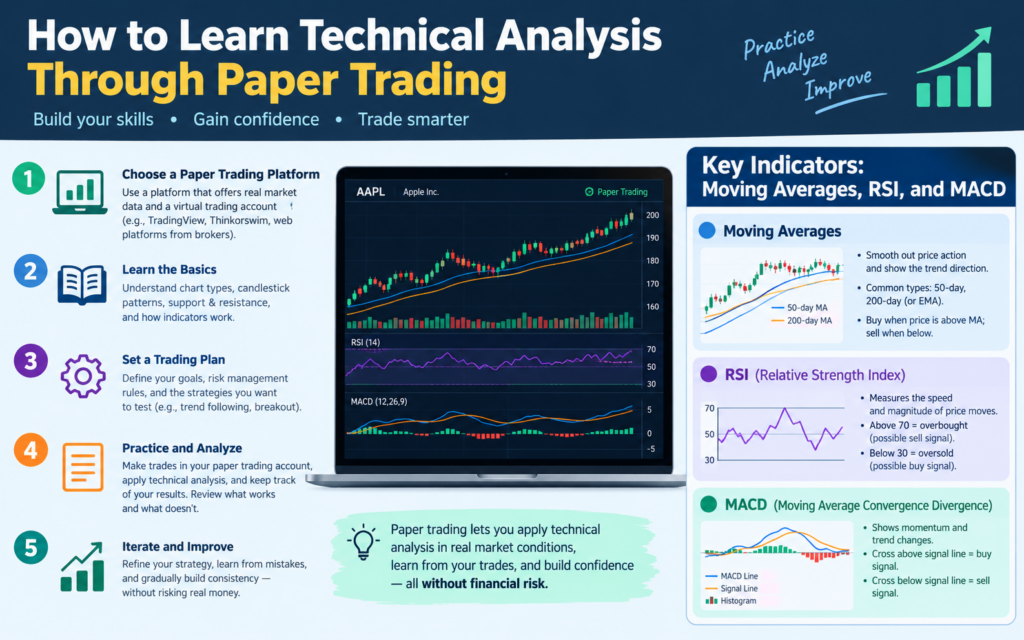
Paper trading is a method of practicing trading securities in order to gain experience without trading actual money. Represents real market prices, real charts, real order types, and with no financial risk. It is utilized by beginners to learn about market movements, test strategies for market entry and exit, and gain confidence before investing real money.
The problem? Many new traders take their simulated account for granted which is what defeats the purpose. In order to derive real value from practice, there should be structure. The solution is clear paper trading rules, which make your virtual trading as realistic as real trading — so it’s a lot more likely to be applicable in real trading.
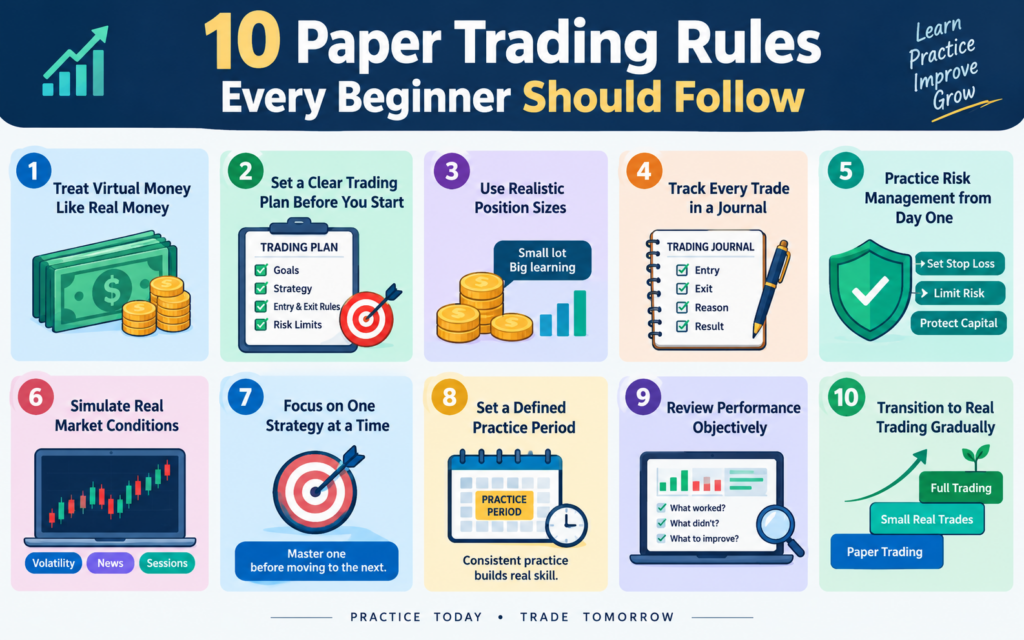
The 10 Paper Trading Rules Every Beginner Should Follow
1. Play with Virtual Money as if it were real.
The most common error novices make is that they engage in trading recklessly simply because it is not real. Start with a realistic balance and as if the money you are saving were at stake in each trade. This will help develop the discipline you need later.
2. Set a Clear Trading Plan Before You Start
Have clear criteria on what you would enter and exit a trade as well as position sizing and risk tolerance before you enter a single trade. A plan reduces emotion from decision making and provides you with something tangible to review once you’ve made your decision.
3. Use Realistic Position Sizes
Do not buy one stock because there is NO risk. Use position sizes you would use with real money, usually 1-2% of your total funds per trade and practice accordingly.
4. Track Every Trade in a Journal
Log all your thoughts, entry, exit and result. A weekly reading of this journal will reveal trends in decision-making that won’t be apparent in raw profit or loss.
5. Practice Risk Management from Day One
For real and simulated trading, always implement stop-loss and risk limits. When players don’t do it during practice, they don’t do it when they play for money.It’s a practice that can cost them and often they don’t do it during the game.
6. Simulate Real Market Conditions
Only trade during actual market hours, and if your platform permits, take into account slippage, spreads and commissions. A perfect, frictionless practice area can help to create an illusion of profitability.
7. Focus on One Strategy at a Time
It is not possible to test 5 strategies at once and determine which ones are working. Use one method and stick with it for a number of trades or a number of weeks, then analyze the results and proceed with the next method.
8. Set a Defined Practice Period
Set a deadline (30-90 days) to move to a live account. You can get into a paper-trading rut and not make any real progress if you do this indefinitely.
9. Review Performance Objectively
Don’t focus on the score only when you look at a game. Review the percent of winning streaks, average risk to reward ratio, and consistency. It’s more than a random good run, it’s objective metrics.
10. Transition to Real Trading Gradually
If it’s time to get started, don’t invest in the market at full strength; go in small bites. This can help to prevent emotional involvement and help to adjust to the psychological shift from virtual to real trading.
Choosing the Right Paper Trading App for Beginners
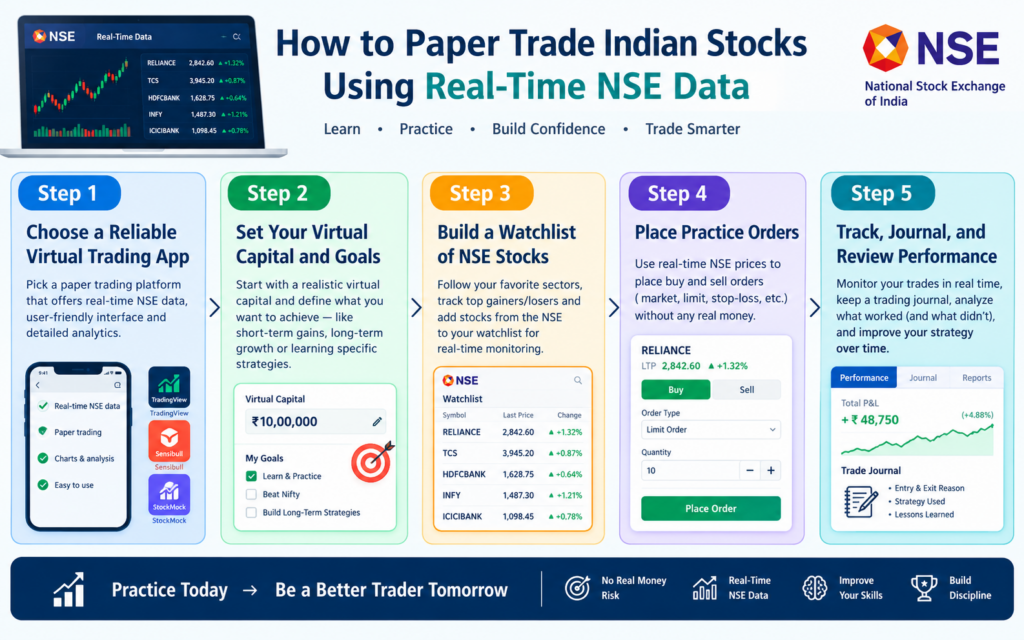
Following these rules is easier with the right tool. A good paper trading app for beginners should offer:
- Market data in real time or delayed market data that is “realistic” (in the sense of being real-time, or close to it).
- An easy to use, simple interface
- In-built reporting or tracking of performance.
- Multi-asset classes trading (stocks, options, crypto, forex)
- A free tier or trial to test the experience without risk!
Popular choices frequently enclose educational materials with simulation equipment, which is helpful in bridging theory with practice. Make sure the app is similar to the broker’s platform you will be using to trade with the real data, as it will make for a smoother transition.
Common Mistakes to Avoid
- Not observing emotional discipline, as though it was not real money!
- Trading too much to try out strategies in a short period of time
- Not reviewing the process at each trading session
- Applying a non-realistic approach to the market.
- Fearing and remaining in simulation without ever getting out.
You May Also Like:Best Trading Apps in India
How long should I paper trade before going live?
Most beginners benefit from 30 to 90 days of consistent practice, or enough time to complete at least 50-100 trades with a documented strategy.
Is paper trading a good indicator of real trading success?
It’s a strong learning tool, but real trading involves emotional pressure that simulations can’t fully replicate. Use it to build skill, not to guarantee future profits.
What’s the best paper trading app for beginners?
The best app depends on your goals — stock traders, options traders, and crypto traders each have platforms tailored to their needs. Prioritize ease of use, realistic data, and performance tracking features.
Can I lose money while paper trading?
No — paper trading uses virtual funds, so there’s no real financial risk. This makes it ideal for testing strategies without consequences.
Should I follow the same rules in live trading as in paper trading?
Yes. The value of paper trading comes from building habits and discipline that carry over directly into live markets.