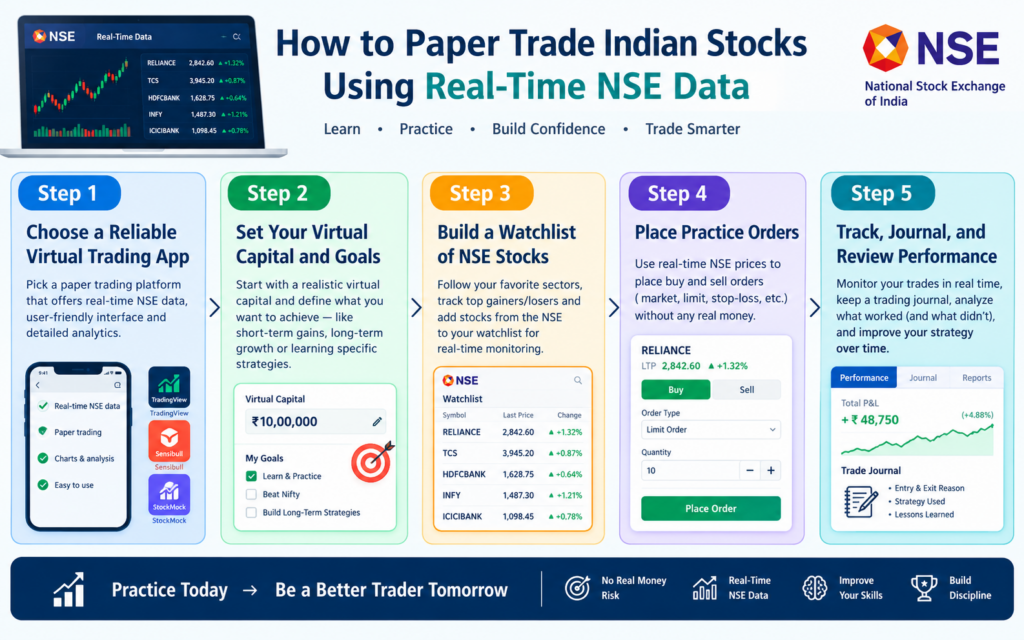
It’s easy to invest real money without any experience and lose both money and experience. This is where a paper trading app can help. It provides you with the opportunity to purchase, sell and manage a portfolio with virtual money in real trading environment without any financial risk — all learning. From novice traders to those looking to test out a new approach, a trading app simulator can make all the difference between making informed decisions and costly guesses. This guide will explain what virtual trading is, what to look for in the best virtual trading app and how to make a successful transition into real money trading.
What Is a Paper Trading App?
A paper trading app is a simulator that is used to simulate live market conditions with real-time or delayed market prices but with fake money. You trade, monitor your performance and create your portfolio exactly as you would in a genuine market — except that you don’t lose or win any money.
How Virtual Trading Simulates Real Market Conditions
Most virtual trading apps get the price feeds from real exchanges, which means price movements, charts and order books are a true representation of what is happening in the real market. This allows for practice sessions to be more real than they would be if it were a game.
Paper Trading vs. Live Trading — Key Differences
It’s virtually the same, except that live trading requires real money, actual slippage and real emotions, factors a simulator can’t replicate. Paper trading is about learning how, live trading is about learning if you can!
Why Every Trader Should Start With a Trading App Simulator
Using a simulator is a great way to get a feel for the market without risking any money and before you risk any dollar.
Building Confidence Without Financial Risk
When you first start trading, it can be daunting. A simulator eliminates the fear factor and allows you to become familiar with the order types, timing and navigating the platform.
Testing Strategies Before Real Capital Is on the Line
Are you thinking of a new approach? Test it out in a safe setting so far as testing for back-testing is concerned. You’ll soon find out what is effective and what is not so you don’t invest any real money in it.
Understanding Market Mechanics
Paper trading allows you to become familiar with the tools you’ll need in real markets, and get a feel for how they work in different market conditions such as volatility and slippage.
Key Features of the Best Virtual Trading Apps
Simulators come in a variety of forms and shapes. Here are the differences between good and great.
Real-Time Market Data & Realistic Execution
The top virtual trading apps provide live or near real time feeds, so that practice trading is as similar to real trading as possible, and not based on outdated or streamlined data.
Portfolio Tracking & Performance Analytics
See if there’s applications that provide thorough performance details such as win/loss ratio, drawdowns, and trade history, enabling you to track your progress and adjust your strategy accordingly.
Access to Multiple Asset Classes
If you’re interested in purchasing stocks, options, ETFs, or crypto, a great trading application must provide you with the ability to practice in various markets, not simply one.
Beginner-Friendly Interface vs. Pro-Level Tools
Some apps feature user-friendly dashboards, and some have more sophisticated charting and order types for more sophisticated users. Pick one that is at your level – and one that can be expanded as you become more proficient.
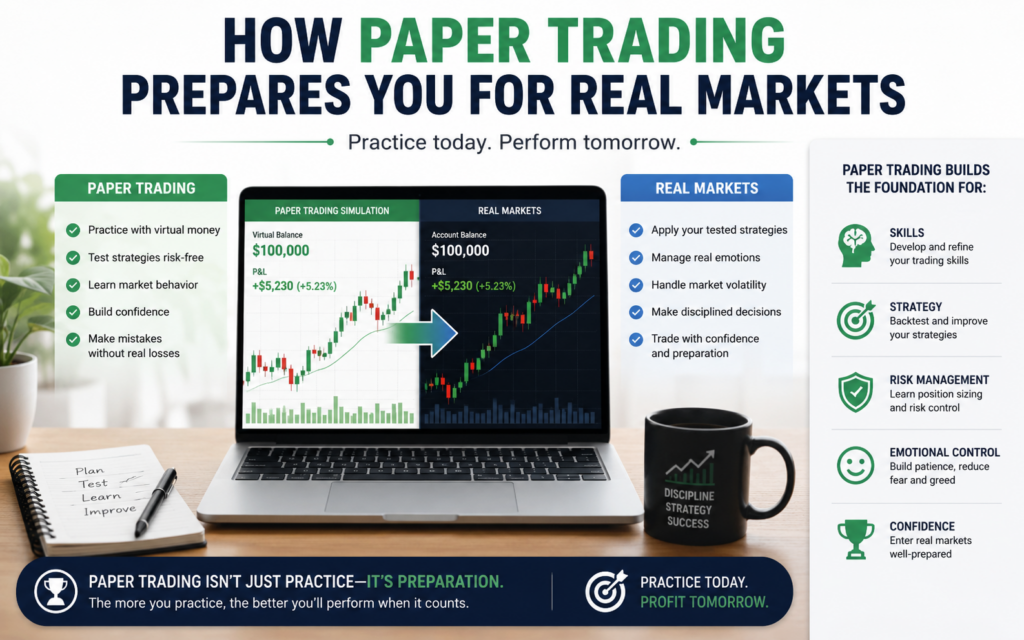
How Paper Trading Builds Real-World Trading Discipline
What you learn in the simulator carries over to the real world.
Risk Management Habits
By using a virtual platform for position sizing, stop-losses and diversification, these practices become ingrained before they have a financial impact.
Emotional Control Under Simulated Pressure
Even though the stakes aren’t money, it’s helpful to practice the concept of gaining and losing over time so that you can learn to make consistent trading decisions, instead of making rash ones based on market fluctuations.
Developing a Repeatable Trading Strategy
Paper trading provides you with room to experiment, optimize and finalize a trading system which you can follow, as opposed to just trading on a whim.
Limitations of Paper Trading You Should Know
While paper trading can be a powerful tool, it cannot replace the experience of trading on the real market.
No Real Emotional Stakes
No one would like to lose their cool if there’s nothing to lose. Simulators don’t fully capture the fear and greed that is associated with real trading.
Idealized Order Fills vs. Real Market Slippage
You might have to deal with liquidity, delays and slippage when dealing with the live markets, whereas simulators make the assumption of a perfect trade.
Transitioning From a Virtual Trading App to Real Markets
When you’ve established your successful simulation trading, it’s time to consider entering the real trading arena.
When You’re Ready to Go Live
Seek indicators such as steady gains over a number of weeks, a well-defined trading plan you feel certain in, and a sense of ease in your trading decisions.
Starting Small With Real Capital
Avoid taking a big bite off the end of the puppet simultaneously. Foremost to get a feel for the emotional aspects of trading and to minimise risk, it is advisable to get started with small quantities of real money.
Choosing the Best Virtual Trading App for Your Goals
Factors to Compare Before You Download
Take into account data precision, available asset classes, user-friendliness, the extent of analytics provided, and if the app can be linked to a brokerage you will be able to eventually trade with. The choice of the right product is dependent on your experience and future plans.
Conclusion — Practice Today, Trade Smarter Tomorrow
A paper trading app is one of the smartest methods to develop trading skills without the risk of money. With practice, test strategies and understanding the mechanics of the markets, you will be confident in your approach to real markets and far more disciplined than jumping in blind.
Frequently Asked Questions
What is a paper trading app used for?
It lets you practice buying and selling assets with virtual money in real market conditions.
Is paper trading really similar to real trading?
It closely mirrors real market data but lacks the emotional pressure of risking actual money.
Can beginners learn trading through a virtual trading app?
Yes, it’s one of the safest ways for beginners to learn order types, charts, and strategy.
How long should I paper trade before going live?
Most experts recommend at least a few weeks to a few months of consistent practice.
Do paper trading apps cost money?
Most reputable virtual trading apps are free or bundled with a broader trading platform.
Does paper trading guarantee success in real markets?
No, it builds skill and confidence, but real trading adds emotional and execution factors that a simulator can’t fully replicate.