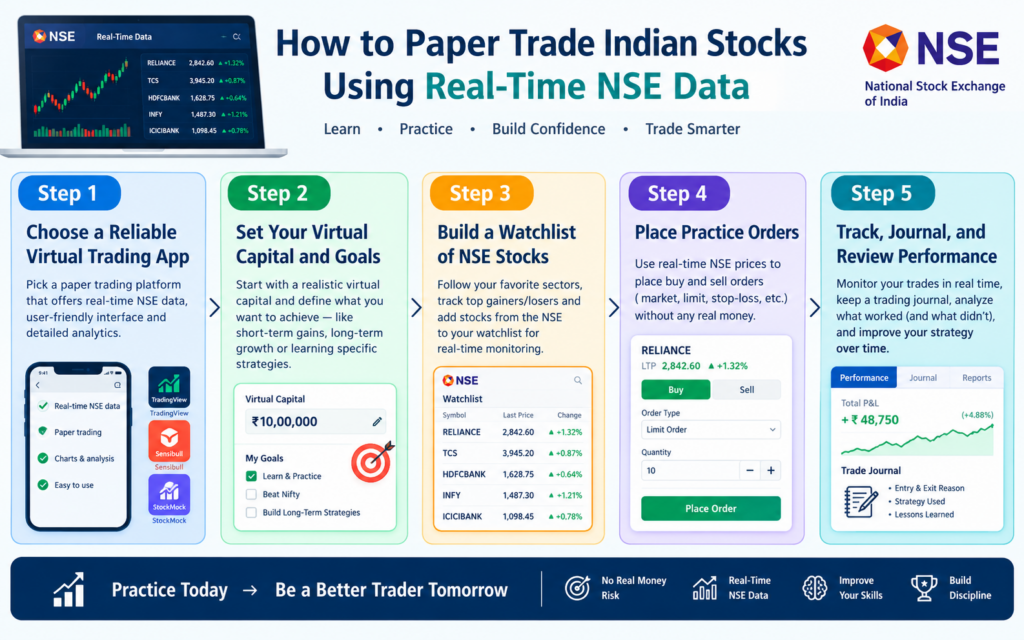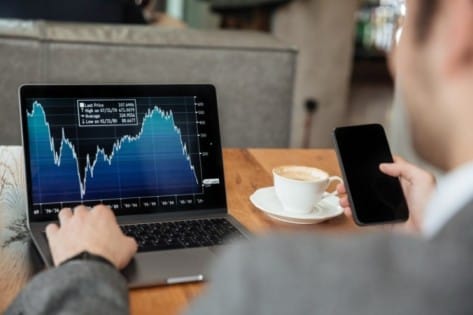
One of the quickest ways for any new trader to lose money and confidence is to just dive into trading. A paper trading app is where it can help. It enables traders to practice trading with virtual money in real market conditions, giving them the chance to learn the mechanics of trading without risking any real money. As of 2026, with the number of applications providing accurate simulators, it is no longer necessary to do this step. Paper trading is an essential component of every beginner’s journey — so here’s why and where to start trading paper first and get the best paper trading app in India.
What Is a Paper Trading App?
A paper trading application is an application that allows you to practice trading cryptocurrencies, options, or stocks with virtual money at real, live market prices. You trade as you would with real cash, but everything you do is cost-free. It’s a safe way to familiarize yourself with trading without risking real money.
How Virtual Trading Works With Real Market Data
A paper trading app will allow you to have a virtual trading account with fake money, but linked with real, live market prices. All orders, stop losses, portfolio monitoring etc., are done as if you were trading in a real account — however, no money is put at risk. It is like a demo trading account that is very similar to the actual market, and you’ll learn what you need to learn and apply those strategies when you get on the real market.
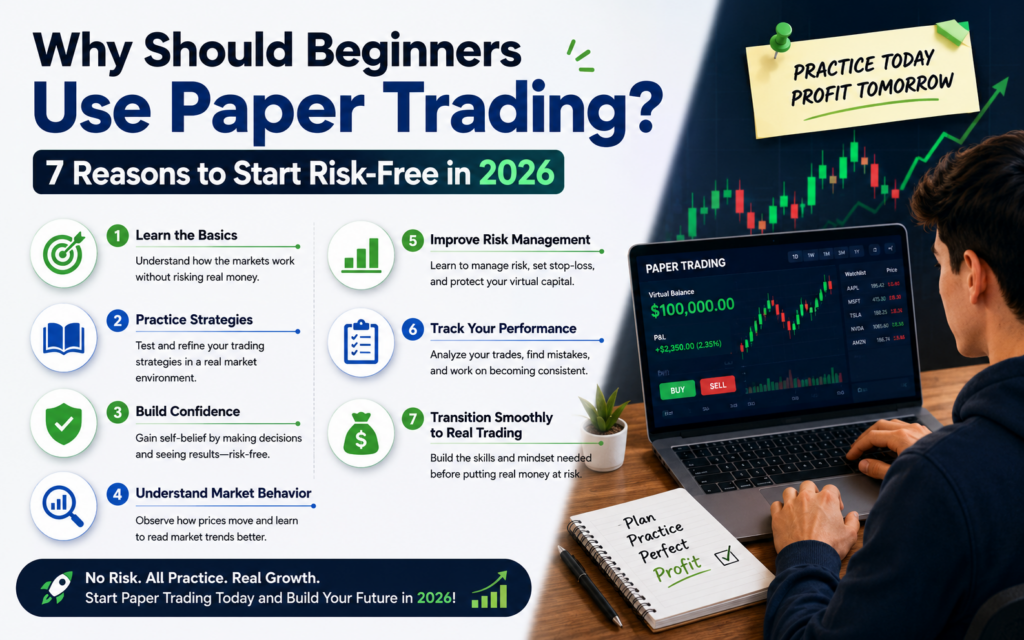
7 Reasons Beginners Should Use Paper Trading
1. Learn Without Risking Real Money
The trading world is steeped in its learning curve and most of the novice traders make costly mistakes in the initial months. Paper trading allows you to make all those mistakes, without losing a single rupee, misreading a chart, buying too early, using the wrong stop loss etc. The lesson comes with no bill!
2. Understand Market Psychology and Emotions
Price action isn’t just made up of numbers, fear, greed, and herd behavior can make much of the action in markets. When it comes to real-time viewing of the patterns, paper trading allows you to see how prices respond to a news event, earnings or sharp downtick. Before you need to be aware of how to deal with your emotions when you’re playing for real money, you become familiar with the psychology of market moves.
3. Practice Using Trading Tools and Platforms
Each trading application includes various layouts, or types of orders and charting tools. Not navigating an interface you don’t know when a trade is on, is a bad way to learn. With paper trading, you’ll have the opportunity to get used to the process of placing trades, reading charts and using the platform’s services, so the process will become second nature when you transition to real trading.
4. Test Strategies Before Going Live
Have a strategy from a book or self-developed? The best spot to try out is paper trading. You can test it in various stocks, on various time periods and in the various markets, and discover how it really works — not as you thought it would. The guideline to follow is “test it over at least 15–20 trades, before you feel it is reliable.
5. Build Confidence Before Real Capital Is on the Line
If you can’t see it, you can’t trade it — you have to do it over and over again to develop and earn confidence. After a hundred simulated trades and watching how they perform, you have a good idea of how you would react in your own as regards risks, timing and decision-making. If you have that confidence, that feeling of security transfers when you start playing real money games.
6. Learn From Mistakes Without Financial Consequences
All traders (both new and experienced) make errors. The issue is, what you lose because of these errors. Paper trading is a way to prevent expensive mistakes and make it like a free lesson. You can see where the trade failed, make the necessary changes and make another trade instantly without losing a penny.
7. Develop Discipline and a Trading Routine
Good trading is about being consistent – following a plan, risk management and not over trading. It’s in the paper trading that you develop these practices. When you go live, you’ll have to be in the habit of following your rules by then; it will not be something you have to force yourself to do.
Top Features to Look For in a Paper Trading App
- Real time market data (not delayed prices)
- Accurate virtual weight to emulate a real weight.
- The list of assets you can trade depends on the company providing the trading service.This means that depending on the company who provides trading services, you can trade stocks, F&O, or crypto.
- Track and see the history of your portfolio.
- An easy transition to a real trading account.
Best Trading Apps With a Free Paper/Demo Mode
In fact, many of the top India trading apps offer a paper trading or demo option. This will allow you to practice trades with real time market data but without using actual money. The best paper trading app is very similar to the live platform — same layout, order types, charting tools and more — your skills built on paper trading will carry over when you enter live trading. If you are comparing choices, select the app that has the most similar demo application to its actual trading app.
How Long Should You Paper Trade Before Going Live?
There is no set time, but 30 days of regular practice or 20–30 trades following risk rules, as outlined, without exception is a good guide. If you continue to take basic mistakes, such as missing out on stop losses, or sizing positions inconsistently, then continue to paper trade. The idea is not to have a perfect record; it’s proof that you can stick to a plan in a real market.
Limitations of Paper Trading
Paper trading has its limitations. Since it’s not real money involved, it’s more difficult to put yourself in that live trader’s shoes, to experience the hesitation, the fear of panicking and selling everything, the adrenaline rush when making large trades. To see this, some traders will paper trade in the same size as they would if they were trading in real money – this is to work through and simulate the psychology of the situation a bit more closely.
Final Thoughts: Start Risk-Free, Trade Smarter
Paper trading won’t turn you into a profitable trader overnight, but it removes the most expensive part of learning to trade — the cost of real mistakes. Use this time to practice your skills, test strategies, and build discipline. Start with the best paper trading app to build that foundation — so when you’re ready, you step into real trading with confidence, not a hunch.
FAQs
Should trading on paper be done by beginners?
Yes, it allows new traders to learn the ropes of the market and platforms while having no financial loss.
Which is the ideal paper trading program in India?
Seek out apps which supply real-time data, a realistic virtual balance, and also support the property classes you intend to trade, as well as an easy way to a live account.
What is the ideal length of time for a novice paper trader before trading with real money?
The minimum, and reasonable, time before one moves to live trading is 30 days or 20 to 30 trades with consistent risk management.
Does paper trading work?
It is closely representative of the real market price and market situation but it is not exactly the same as the real money trading environment as it cannot contain the emotional aspects.
Is paper trading free?
Most trading apps provide paper trading for free on their platform and some advanced trading simulators feature premium features for an extra cost.