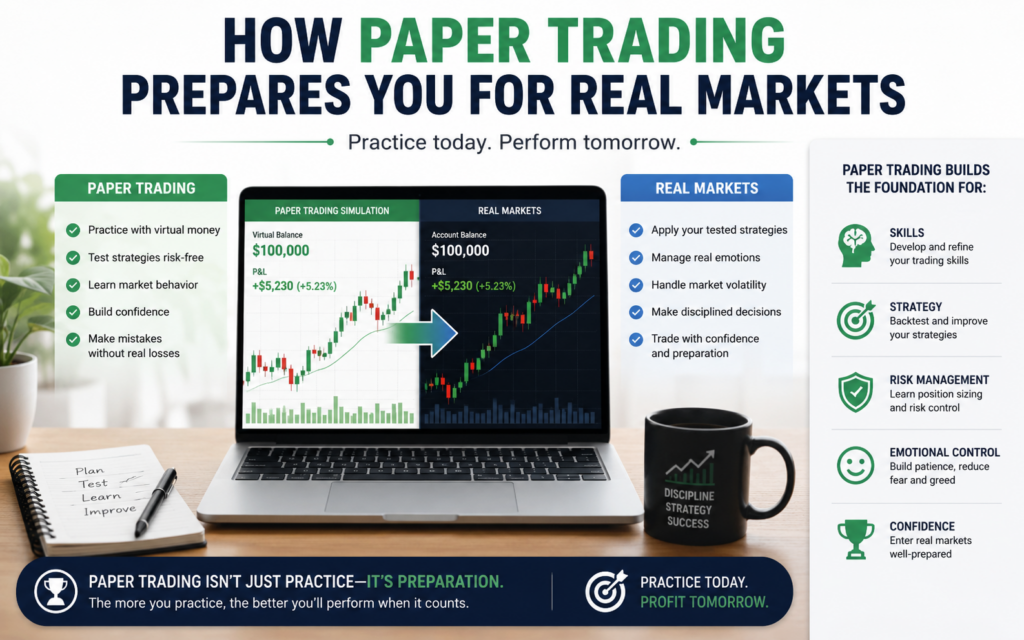
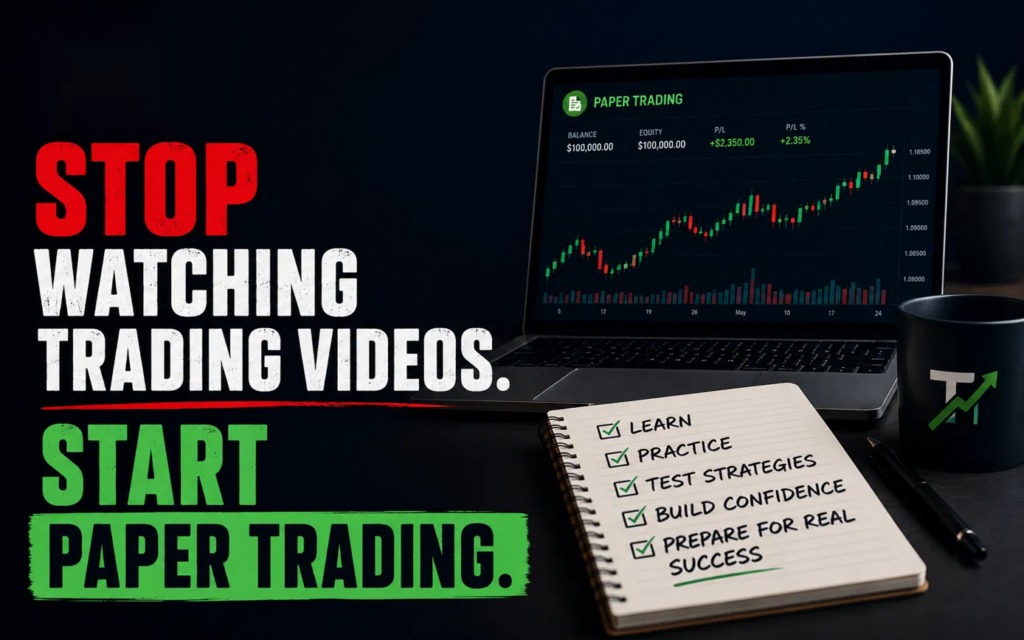
You may have been watching trading tutorials, following market influencers, bookmarking “how to trade” playlists, and generally trying to get as much education and experience in the markets as you can over the past six months, but one thing I can tell you is that none of that has made you a trader. Information that is shared without doing anything doesn’t do anything. The most effective method of learning markets is to open a simulator and make your first investment with fake money.
A paper trading app is designed for just this purpose. It allows you to utilize genuine techniques, actual market scenarios without taking any risks by putting in any amount of your money. Once you’ve got the confidence there, you can easily compare options for the best trading app – and make an informed decision.
What Is a Paper Trading App?
A paper trading app is a simulated trading app that showcases the trade process with virtual money. You place buy and sell orders just like in a real stock brokerage account, but the money is not real, it’s only an experience.
How It Simulates Real Market Conditions
Platforms which pull live or near-live price feeds allow charts, order books and price movements to act exactly like the real market. Some even pretend that there are slippage and order delays, so that you don’t learn in an ideal environment.
Who Should Use One
It is great for beginning investors who are dipping their toes into the stock market for the first time, but it’s not just for beginners. Paper trading app is used by experienced traders to test new strategies, option traders back-test spreads and futures traders practice trading with high leverage before committing real money.
Why Paper Trading Beats Passive Learning
From Watching Videos to Making Decisions
Videos teach concepts. Paper trading is a way to make decisions. You must determine when to buy, when to sell and how much to buy/sell — and they are real minus the dollars, of course.
Building Confidence Without Financial Risk
They cannot come with anything better than an early loss to destroy a new trader’s self-confidence. Practicing first means you don’t try to make your first real mistakes with your rent.
Testing Strategies Before Going Live
It could be swing trading, options spread or scalping, you can execute dozens of trades and sharpen your edge without risking any money.
Key Features to Look For in a Paper Trading App
- Real-time market data — delayed data teaches bad habits
- Realistic order execution — including slippage and partial fills
- Portfolio analytics — win rate, drawdown, and P&L tracking
- Multi-asset support — stocks, options, crypto, and futures in one place
The right combination of these features turns a simple simulator into a genuine training ground for future live trading.
How to Get Started With a Paper Trading App Today
Step 1 — Choose a Platform With Realistic Simulation
Choose a paper trading application that allows real-time information and can mimic the real executions, rather than a toy paper trader with fixed prices.
Step 2 — Set a Practice Budget and Trading Goals
In the virtual world, play with virtual money. Set a Risk vs Trade ratio and determine the winning ratio in advance.
Step 3 — Track, Review, and Refine Your Strategy
Log every trade. Check weekly and review successes, failures and make changes accordingly.
Final Thoughts: Practice First, Invest Smarter
While exchanging videos can help you learn theory, practice helps build up your skill. A paper trading app is a secure and realistic environment to practice trading, so you’ll be well equipped to select the best trading app when you are ready to invest a real dollar.
Can a paper trading app fully prepare you for the best trading app experience?
It builds strong strategy and discipline, but it can’t fully replicate the emotional pressure of trading with real money.
Should you pick the same platform for paper trading and live trading?
Many traders do, since it means a seamless switch from demo to live without relearning a new interface or feature set.
What features carry over from a paper trading app to the best trading app?
Order types, charting tools, and portfolio tracking often carry over, making the transition from practice to live trading smoother.
Which is better for testing options and futures strategies?
A paper trading app is safer for testing high-risk strategies like options and futures before applying them on the best trading app with real capital.
Does switching from a paper trading app to the best trading app require a new account?
Yes, in most cases you’ll need to open and verify a live brokerage account separately, even if you practiced on the same provider’s simulator.
Can beginners skip paper trading and go straight to the best trading app?
It’s possible, but skipping practice increases the risk of costly mistakes that a paper trading app would have caught first.
How do rankings for the best trading app account for paper trading features?
Many reviews now factor in whether a platform offers a built-in paper trading app, since it adds value for beginners before they commit real money.